Bank Feeds
Part of Bank feeds and reconciliation
Matching imported transactions without duplicate entries
See when to match an imported bank line, when to create an entry and how to distinguish overlapping imports from duplicate ledger records.
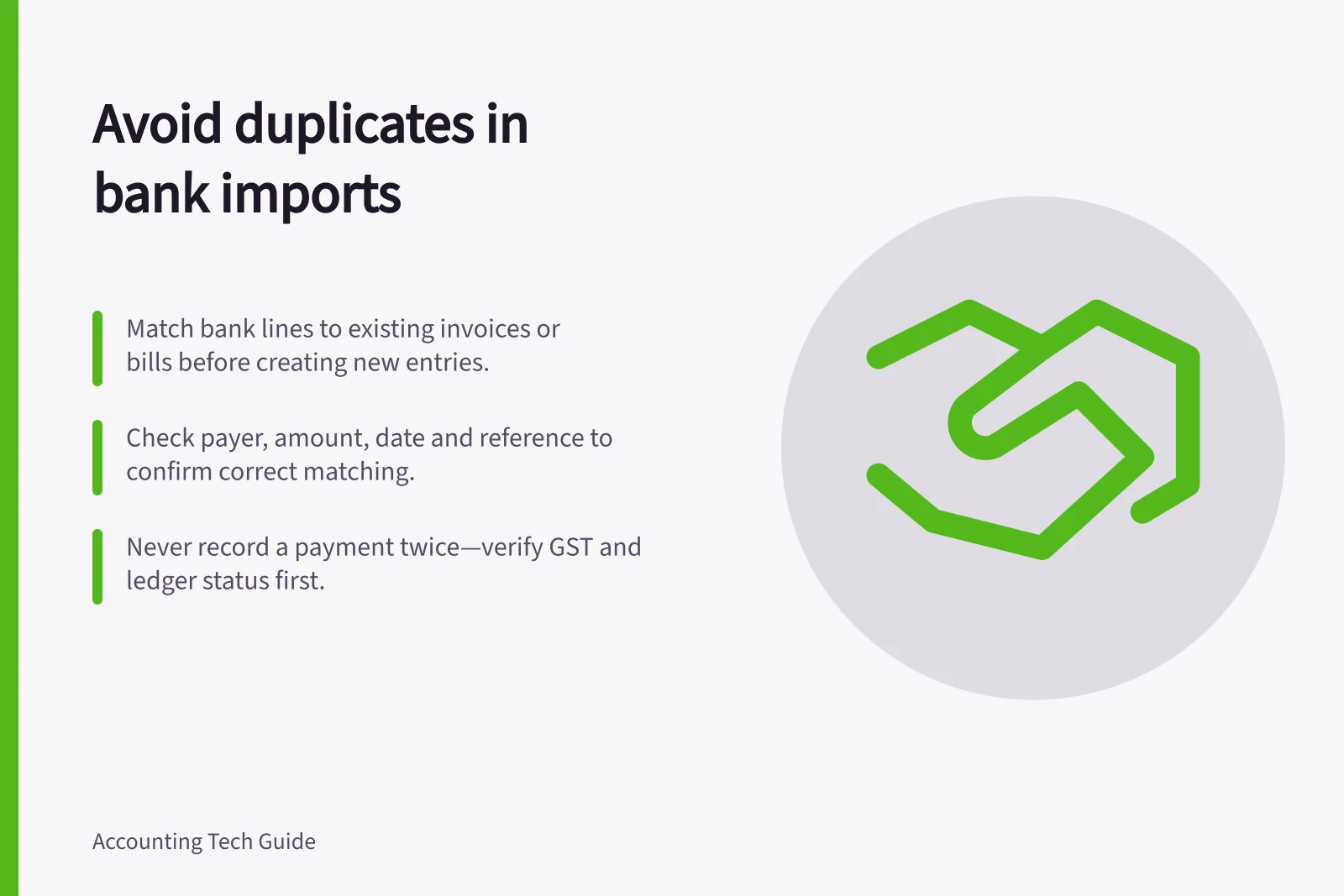
Before you create an entry from an imported bank line, check whether the event is already recorded. Match the line to the correct payment, receipt, transfer or other existing record where appropriate. Create a new transaction only when the event is absent and its purpose is supported.
Know what the action will record
A bank line shows money moving. An invoice or bill may already record the sale or purchase, while the bank movement may record its payment. Matching a bank line to an open invoice or bill can create or mark the related payment in some software; it should not create another sale or expense.
Intuit’s Australian QuickBooks guidance distinguishes matching from categorising and explains that a match is a downloaded transaction that is the same as one already categorised and posted. MYOB describes matching existing records and creating a transaction for an unmatched item. MYOB also describes automatically matching payments from customers and payments to suppliers to recorded invoices and bills, recording the payment against them and closing them. Check the action and settings in your own file.
For example, a hypothetical A$660 deposit may pay an A$660 invoice already recorded. Posting the deposit as a new sale could count the income twice. Check the payer, reference, amount and invoice status before using the product’s payment or match process. The amount alone does not establish the link or any GST treatment.
Matching vs. creating a new transaction in Australian accounting software
- Matching a bank line to an existing recordRecords a payment against an open invoice or bill; closes the record; avoids double-counting income or expenses
- Creating a new transaction from an unmatched bank lineRecords a new sale, expense, receipt or payment only when the event has not been previously entered
Review a suggested match
- Search for an existing invoice, bill, payment, transfer, expense claim or sales record that explains the movement.
- Compare the bank account, amount and direction, date, counterparty, reference and source document. Two genuine transactions can have the same amount.
- Check whether one bank amount combines several receipts or includes a fee. Use the product’s supported grouping or clearing process where needed; a net deposit is not automatically a new sale.
- Confirm whether accepting the action links a line, records a payment or creates an income or expense entry.
- Leave the line unresolved with an owner if the source or accounting treatment is unclear.
MYOB describes rules that can create matching transaction records. Its AccountRight settings can automatically approve matches and record invoice or bill payments. Review those settings and the resulting ledger entries; do not assume every item waits for manual approval.
Diagnose duplicates before correcting them
A repeated bank line may come from a statement file overlapping a feed. A repeated ledger entry may come from recording a new transaction for an event already entered. One genuine line matched to the wrong entry is a third problem. Compare the bank statement, imported lines and ledger records to identify which occurred.
Do not remove an earlier reconciled item because a later line looks similar. Establish which lines represent real bank movements, which entries they affected and whether an earlier reconciliation or reported period would change. Preserve the references and ask the accountant to review corrections affecting an approved period.
After a batch, compare the bank movements with the ledger results. Each actual movement needs an explanation, existing records should be linked to the intended movement, and uncertain items should remain visible for review.