Bank Feeds
Part of Accounting technology improvement
Measuring time saved in monthly reconciliation
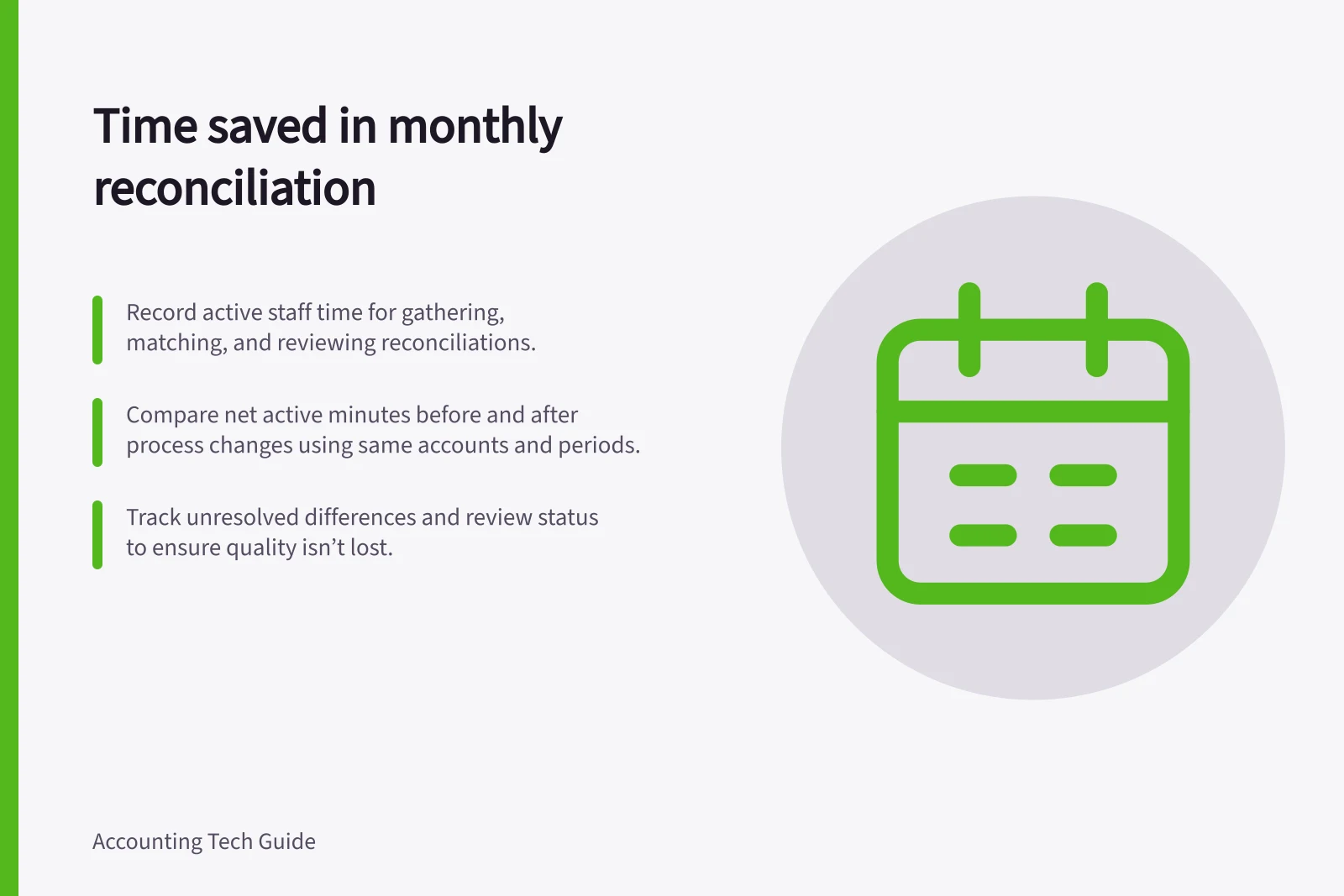
Define reconciliation work consistently, compare active time across similar months and check that quality has not slipped.
Measure time saved in monthly reconciliation by recording the same defined work before and after a process change. Include preparation, matching, investigation, review and rework. Report the change alongside workload and unresolved differences, so a quicker close does not conceal skipped checks.
Define the work being timed
Name the accounts and monthly periods included. Start when staff begin gathering the bank statement and ledger information. Finish when the dated reconciliation is reviewed and saved.
Record active staff time separately from time spent waiting for a feed, another person or an answer. Waiting may affect the close date, but it is not staff time saved.
Have preparers and reviewers record time in the same categories before and after the change:
- Gathering records and checking completeness.
- Matching or entering items.
- Investigating differences and obtaining evidence.
- Reviewing and correcting the result.
- Saving the reviewed reconciliation and assigning open items.
A bank feed may bring movements into the software, but MYOB's documented workflow still calls for reconciliation against bank records. Count the checking work that remains after any automatic matching in the product used.
Consistent Workflow for Measuring Reconciliation Time
- Gather bank statement and ledger records
- Match or enter transactions manually
- Investigate discrepancies and collect evidence
- Review and correct reconciliation
- Save dated reconciliation and assign open items
Compare comparable periods
For each month, note the account, statement date, number of movements, exceptions, backlog and unusual events.
Compare more than one cycle if workload varies. If the later month has fewer movements, show that difference and consider active minutes per movement alongside total minutes. That rate is context, not proof that all movements require equal effort.
Calculate net active minutes saved = baseline active minutes − later active minutes, using the same stages and people on both sides. The result can be negative.
Include time spent reviewing automated suggestions and resolving new exceptions in the later period. Record setup and ongoing maintenance separately when judging whether the change is worthwhile.
Check the accounting outcome
Keep the dated reconciliation and identify outstanding items. Check whether the statement balance agrees, timing differences are explained and another reviewer can follow corrections. Track later adjustments or reopened reconciliations: work discovered in the next month may change the apparent saving.
A preparer may spend less time while a manager spends more reviewing. Report both. Likewise, faster matching may leave more old exceptions. Show the age and owner of open items as well as time.
State the result
Summarise the periods, volumes, active minutes, waiting time, exceptions and review status. Attribute a saving to the change only as far as the periods are comparable. With limited observations, describe an early result and continue measuring.