Ledger Setup
Part of Accounting automation controls
Reviewing suggested transaction categories before posting
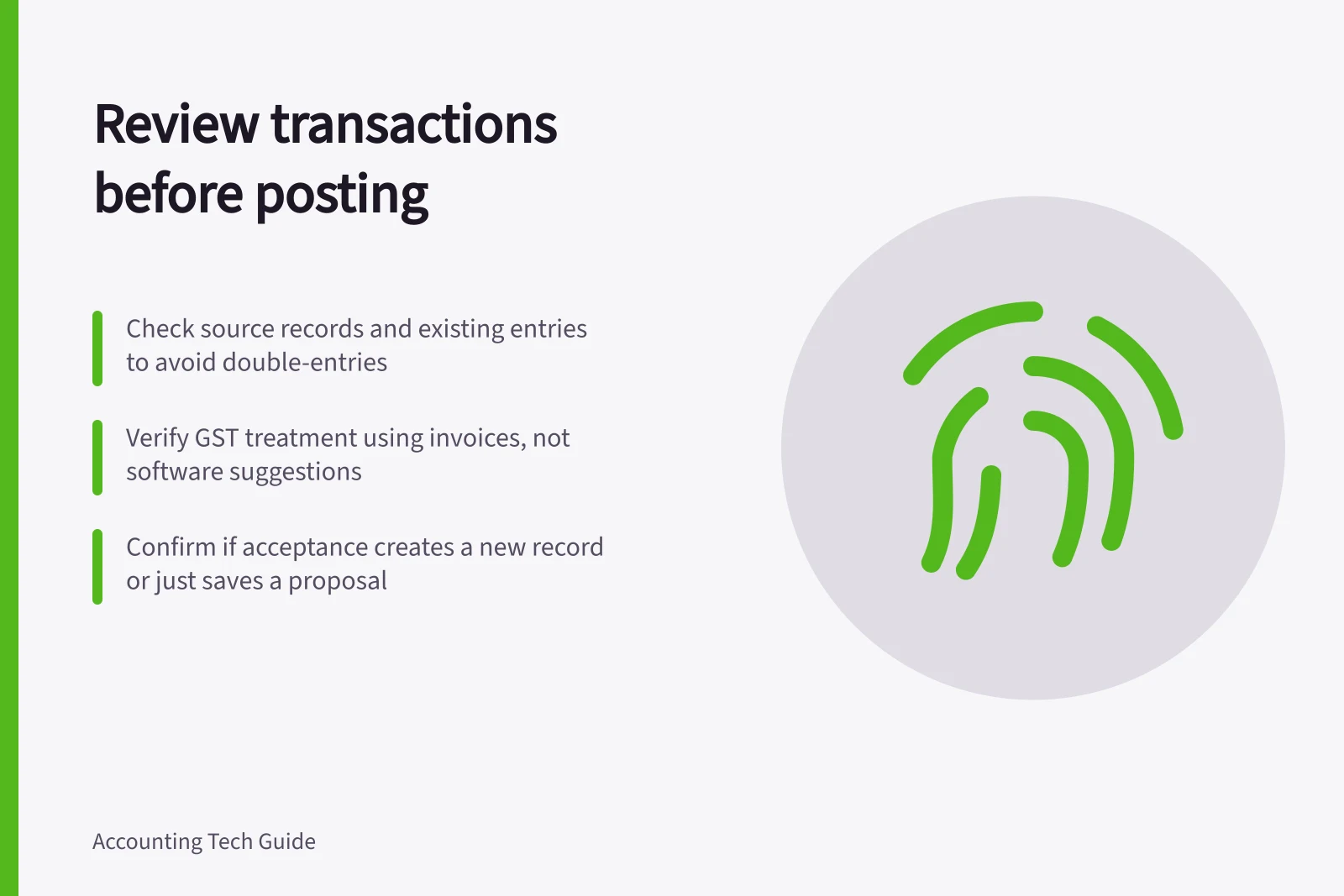
Check the source record, existing entry, account and GST treatment before accepting a suggested transaction category.
Treat a suggested category as a proposal. Before accepting it, check the source record, any entry already in the books, the proposed account and the GST treatment. If the software can create or match an entry automatically, set a review point before that action for transactions your policy says must wait.
Identify what the suggestion will do
A bank-feed item may match an existing bill, follow a rule or receive a suggested category. These actions have different accounting effects. Matching a payment to an already recorded bill should not create a second expense. Categorising an unmatched payment may create a new spend-money record.
MYOB’s current guidance shows why the distinction matters: some bank rules and category matches can create records automatically, while other matches appear as suggestions. Its newer matching features are still being rolled out. Check the behaviour and settings of the product and file in use. The presence of a suggestion does not establish that nothing has already posted.
Automatic matching vs. suggested categories in MYOB
- Action Type
- Matching to an existing bill
- Accounting Effect
- No new expense created – updates existing record
- Action Type
- Categorising an unmatched payment
- Accounting Effect
- Creates a new spend-money record
Check the transaction before acceptance
- Existing entry:Look for a bill, expense claim, transfer or other record already entered. Match the bank item to it where appropriate.
- Business purpose:Compare the bank description, amount, date and counterparty with an invoice, receipt or other source record. A familiar supplier name alone does not identify what was bought.
- Account:Check the proposed category against the business’s chart of accounts. Escalate an unclear choice between an expense, asset, liability or transfer.
- GST:Use the source document and approved coding guidance. Do not infer a GST credit from a merchant name or a software suggestion; refer uncertain treatment to the accountant or BAS adviser.
- Result:Confirm whether acceptance records a match, creates an entry or merely saves a proposal. Keep the reason for a material override.
A payment labelled with a software provider’s name, for example, could settle an existing bill, pay a new subscription or represent a refund. The bank label cannot settle that question.
Correct the cause of repeated errors
If similar suggestions keep being wrong, inspect the rule and the earlier matches that may influence later suggestions. Narrow or disable an automatic rule where the transaction type varies. Review entries already affected: editing a MYOB rule does not change transactions it matched or allocated earlier.
Keep uncertain items in an exception queue with an owner. Also review a sample of accepted or automatically matched items. An incorrect rule can apply consistently without appearing as an exception.