GST & Reporting
GST and business reporting workflows
Trace GST figures from source records through coding, reconciliation, BAS review and lodgement, with clear ownership of exceptions.
A GST reporting workflow should let a reviewer trace every BAS figure to the sales and purchases behind it. Software can assemble figures, but its totals still need review.
Confirm the reporting scope
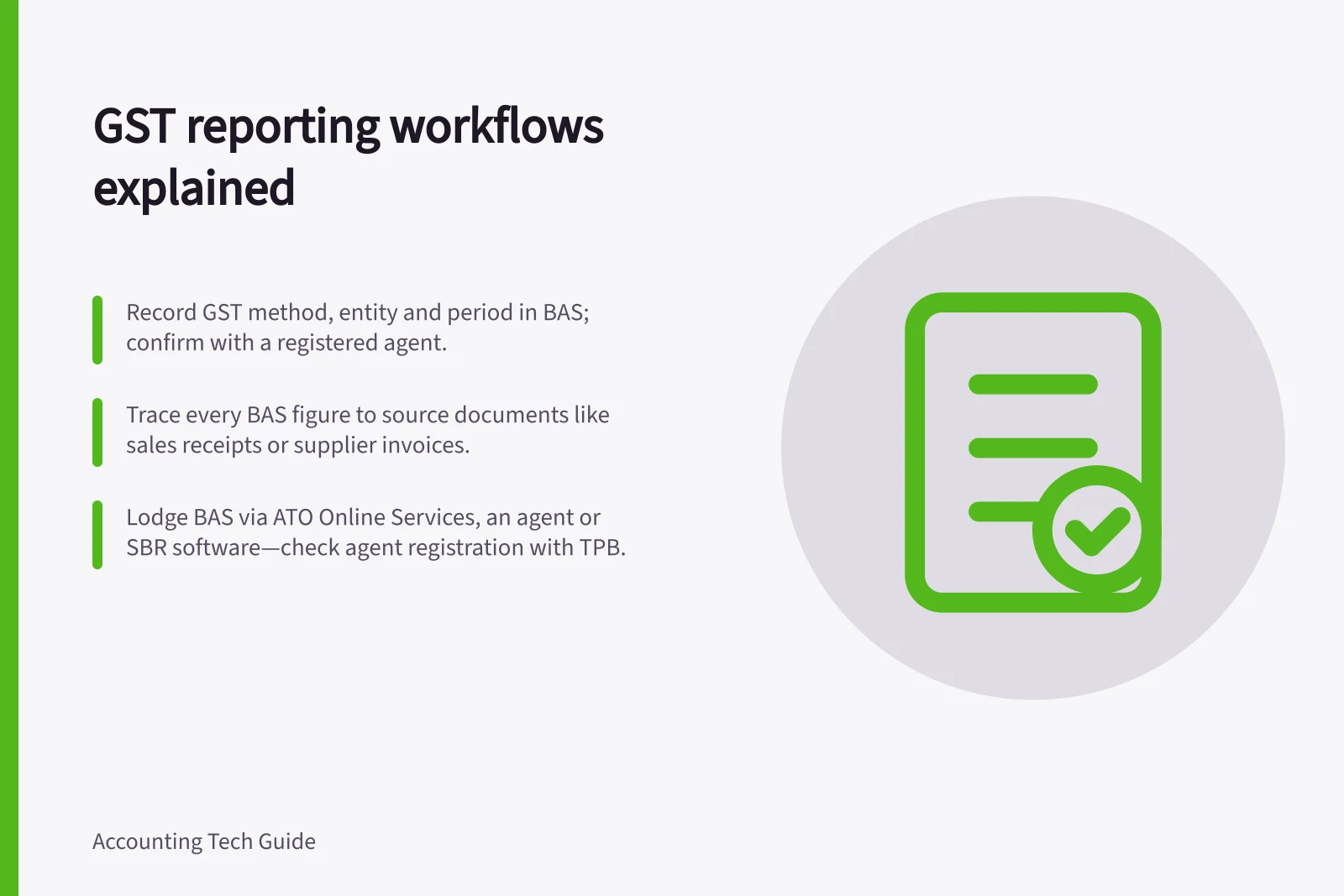
Record the business entity, GST reporting period, GST accounting method and applicable BAS sections. Confirm uncertain obligations with a registered tax or BAS agent. A BAS can cover taxes beyond GST; required fields depend on the business’s registrations and reporting cycle. Keep the GST method separate from any cash or accrual view chosen for a management report.
| Stage | Record to keep | Review question |
|---|---|---|
| Capture | Sales and purchase documents or source-system reports | Can each event be identified and retrieved? |
| Code | Transaction and its reviewed GST treatment | Does the code suit this transaction? |
| Reconcile | Ledger and GST detail | Are missing, repeated and unmatched items explained? |
| Prepare | Draft BAS figures and exception list | Do the figures cover the intended entity and period? |
| Lodge | Reviewed statement and submission record | What was submitted, by whom and through which route? |
Align the reporting calendar with the entity’s actual BAS frequency; do not assume every business reports on the same cycle.
Key GST Reporting Metrics for Australian Businesses
- BAS Frequency
- Monthly, quarterly, or annual (based on business size and turnover)
- ATO Due Date Window
- Typically 2 weeks after BAS is issued
- TPB-Registered Agents
- Required for professional lodgement; unregistered agents offer no protection
- SBR Integration
- Supported by major accounting platforms including Xero and MYOB
Trace the figures
Compare sales records with receipts, credits and refunds. A bank deposit may settle a sale already recorded; recording it again would duplicate it. For purchases, link the ledger entry to its supplier document and check whether a bill, card transaction or bank import recorded the same expense twice.
If a point-of-sale, ecommerce or other system supplies a summary, retain the detailed source report and its period. Reconcile imported totals to the ledger. Refer uncertain GST treatment to a qualified adviser; a supplier or account default does not decide every transaction’s treatment.
Review before lodgement
Compare GST detail with BAS working figures, investigate exceptions and check sales and purchases fall in the correct reporting period. Give each unresolved item a source reference, owner and next step. Keep a figure provisional while an underlying item that could affect it remains unresolved.
Retain the reviewed statement and confirm submission through the route used. Lodgement and payment are separate: record the payment or refund when it occurs; a prepared statement is not proof of settlement.
Plan the reporting cycle
Use the activity statement as the cycle’s timetable: the ATO sends it about two weeks before the reporting period ends, and the due date appears on the BAS. Add that due date to the business calendar so preparation and review can be planned around it.
At the start of each cycle, assign who gathers records, prepares figures and reviews them. Give the reviewer the draft BAS figures, supporting reports and unresolved-items list together, so review covers both figures and evidence.
Choose and check the lodgement handoff
Agree in advance who will lodge and how. BAS lodgement options include a registered tax or BAS agent, the ATO’s Online services for business, Standard Business Reporting (SBR) software, or a linked myGov account for a sole trader. Nil statements can also be lodged by phone; mail is another option.
If an agent handles the BAS, check registration with the Tax Practitioners Board (TPB). Business.gov.au advises there is no protection when using an unregistered tax or BAS agent; the TPB register can confirm an agent’s registration.
After review, hand approved figures and any required payment instructions to the person lodging the statement.
Keep later changes visible
Preserve the lodged copy and the reports used to prepare it. If a later entry changes a previously reported period, establish whether the original record was wrong, an item arrived late or a later event changed the position. Have the accountant or registered BAS agent decide the reporting response before using a software adjustment option. Keep the decision and correction reference with the affected records.
In this guide
- Checking current software support for Australian reportingCompare documented Xero, MYOB Business and QuickBooks Online routes for BAS review and lodgement, including role and connection limits.
- Preparing source records for a qualified tax reviewAssemble a dated BAS review pack with source documents, transaction detail, reconciliations and clear questions for a qualified adviser.
- Reviewing GST tax codes after a product or supplier changeFind affected records, check source documents and defaults, and document a qualified GST decision before changing tax codes.
- Correcting a software setup error without guessing tax treatmentPreserve the reports, confirm treatment, identify affected settings or entries, and check the result before closing a GST setup error.