Ledger Setup
Part of GST and business reporting workflows
Correcting a software setup error without guessing tax treatment
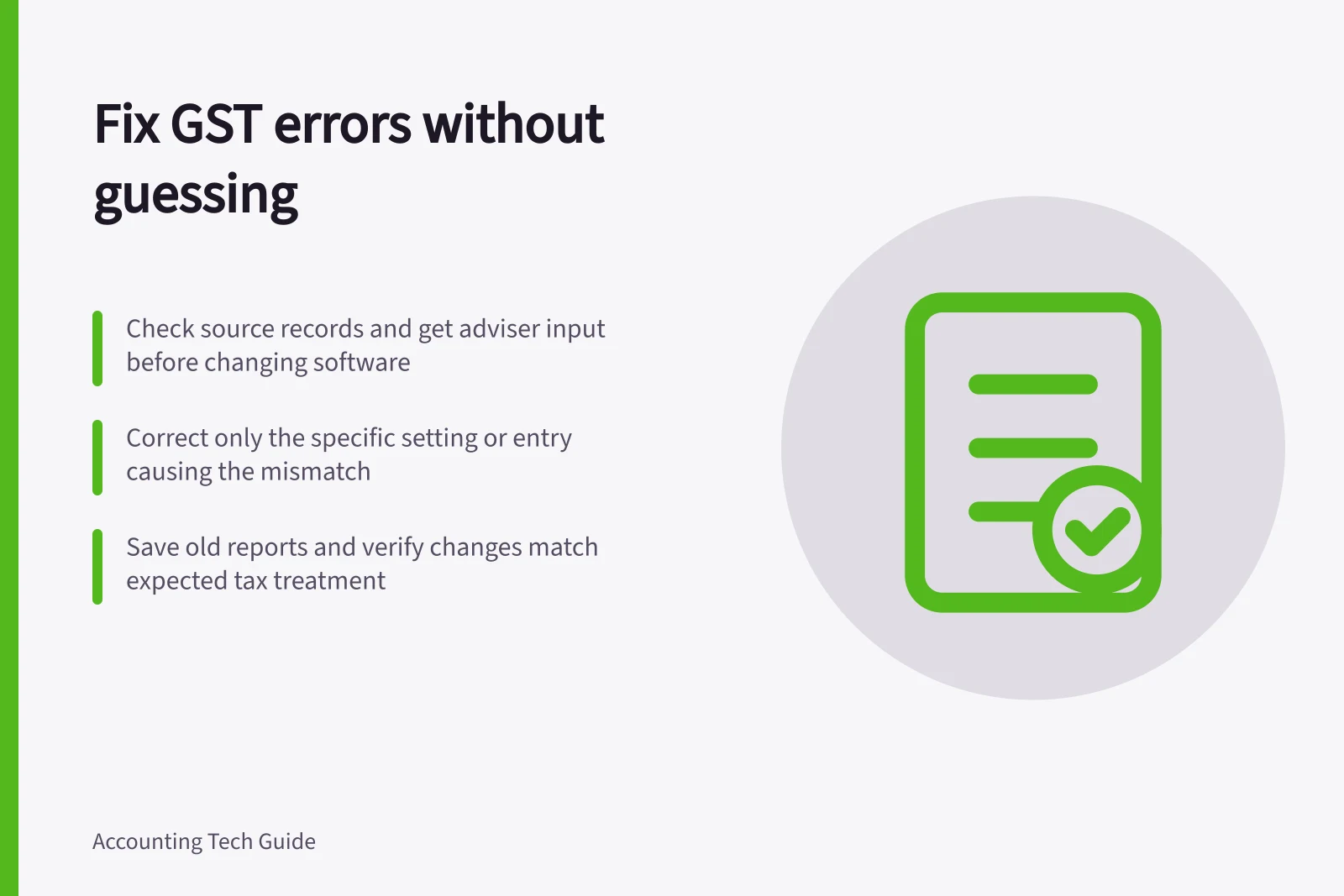
Preserve the reports, confirm treatment, identify affected settings or entries, and check the result before closing a GST setup error.
When a GST report looks wrong, establish the expected treatment from the source records and a qualified adviser where needed. Find the setting or entry that produced the different software result. Correct the identified records and compare the reports again. A code chosen only to make a total look right is not a tax decision.
Key Facts for Correcting GST Setup Errors
- GST Accounting MethodMust be confirmed for accurate reporting; affects how GST is calculated and reported.
- Registered BAS Agent Required?Yes – ensure your BAS preparer is registered with the Tax Practitioners Board (TPB).
- MYOB Tax Code Change RuleChanging a tax rate in MYOB applies only to future transactions, not historical ones.
Preserve the starting position
Save the current settings, GST detail, draft or completed BAS report, and suspect transaction references. Record the entity, period, GST accounting method and report date. If a BAS has been lodged, keep its actual lodged copy: a fresh software report may contain later edits.
Describe the symptom before naming a fix. For example, several supplier bills may appear under an unexpected code. Check whether the difference arises from a transaction code, item or account default, reporting setting, date, missing entry or duplicated entry.
Separate the tax question from the software fault
Inspect the original invoice, bill, credit or other source record. Ask an accountant or registered BAS agent to confirm treatment if it is uncertain. If you use someone to do your BAS, business.gov.au says to make sure they are registered with the Tax Practitioners Board.
Write the expected result beside the observed result, then classify the fault:
Finding / Check before changing anything
- Wrong default for future entries
- Which items, accounts, templates or rules inherit it?
- Wrong code on posted entries
- Which exact transactions and periods are affected?
- Wrong report setting
- Which saved reports or statements used it?
- Missing or repeated entry
- What source event and ledger record exist?
- Unclear GST treatment
- Obtain a qualified decision first.
Expected vs Observed Results in GST Reporting
- Observed ResultSupplier bills appear under an unexpected code in GST report.
- Expected ResultBills should be coded under correct GST category based on business activity and source document.
Correct and verify
Approve the proposed change, effective date and affected population. Use the product’s supported process to change only those settings or entries. Inspect representative transactions and compare the full affected GST detail before and after the edit. Retain the authorisation, old and new reports, and correction references.
MYOB says changing a tax-code rate does not update earlier transactions using it; the change applies only to future transactions. Inspect both defaults and posted entries rather than assuming one setting change repairs everything.
If the problem may affect a lodged BAS, ask the qualified adviser whether and how the earlier reporting should be addressed. Close the issue when the affected books, reporting record and remaining exceptions can all be explained.